
The Big Picture of the Book of Mormon
City of Nephi/Waters of Mormon
Part 11 of 13
Where were Nephi's City and Alma's Waters of Mormon.
Who Was Already There?
That's a question we need to consider before we can fully understand the City of Nephi.
Because when we picture Lehi arriving in the promised land, most of us usually picture a completely empty wilderness.
But is that what the Book of Mormon actually tells us?
Nephi eventually leaves the Land of First Inheritance with his family...
and with “all those who would go with” him.
He establishes a new city.
He builds a temple.
His people multiply and prosper.
They develop agriculture, manufacturing, and trade.
And eventually, Jacob is preaching against their accumulation of wealth and their “costly apparel.”
So we have to ask:
Where did all of this happen?
And perhaps even more importantly:
Who was already living in this land when Lehi arrived?
Hi, I'm Kendall, the Mormon Mann.
We are currently in our PART 11 of 13 Parts — The City of Nephi and the Waters of Mormon.
And in this investigation, we're going to let Mormon's own geographical descriptions guide us.
If you prefer reading about this information or would like to copy and paste this information, you can find me on my “themormonmann.com” website.

Please feel free to share this investigation into the location of the Book of Mormon with your family and friends.
INTRODUCTION
Was the Land Already Inhabited When Lehi Arrived?
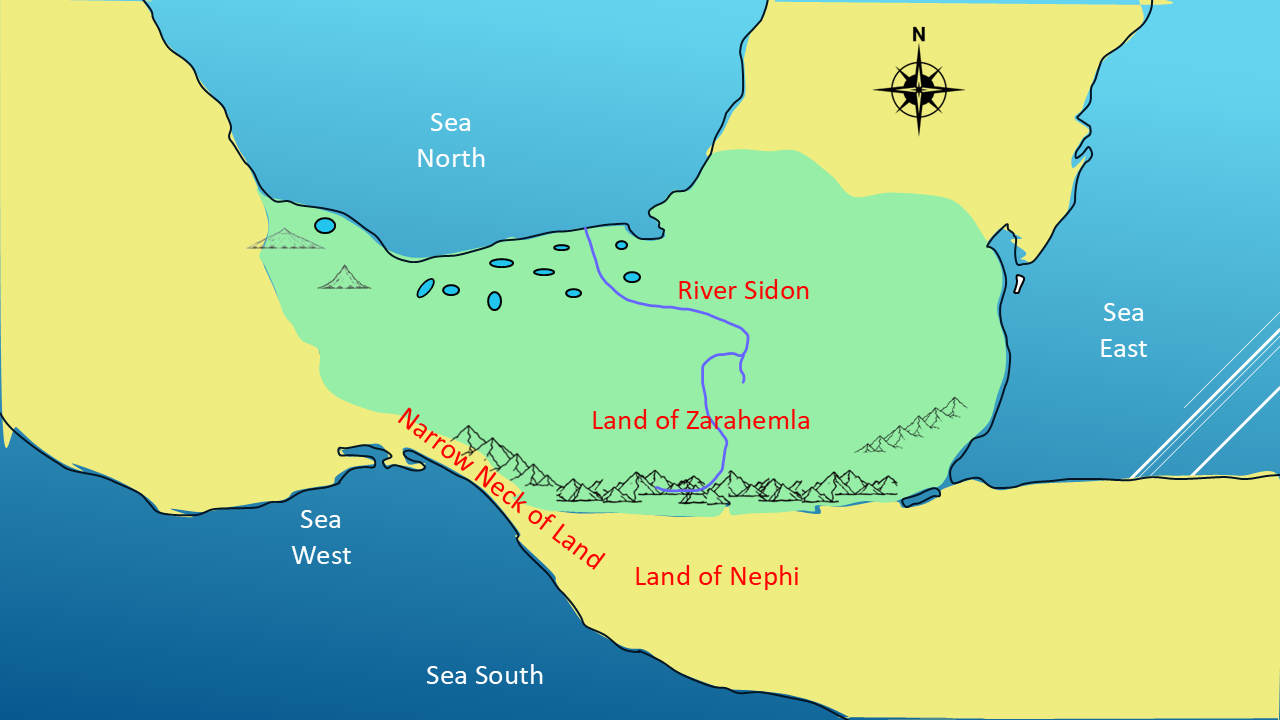
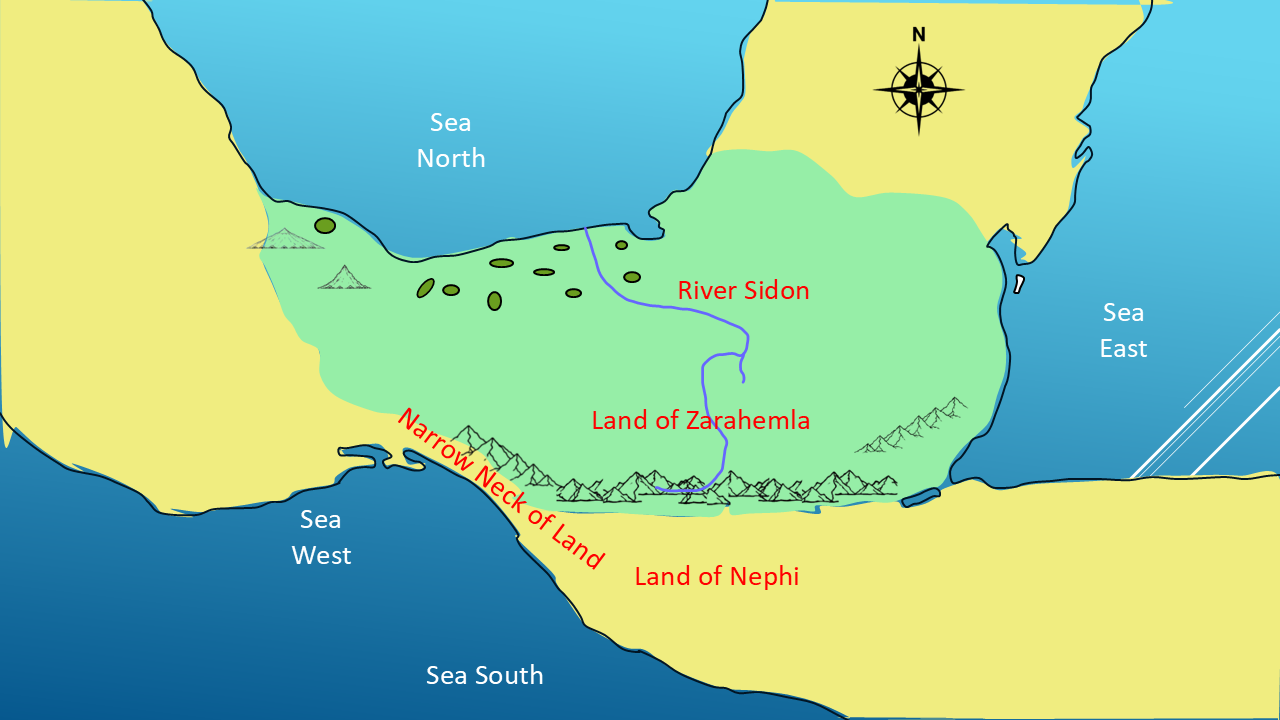
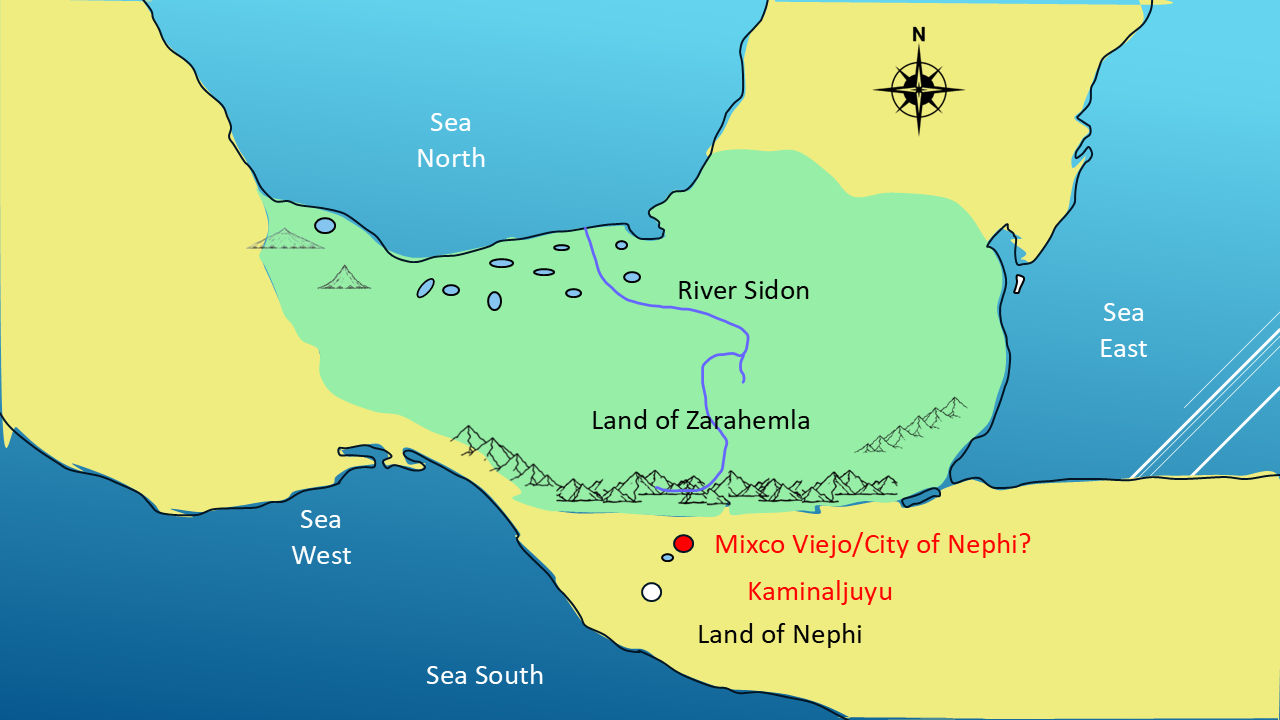
We have identified the general location of the Land of Nephi.
We've identified the general location of the Land of Zarahemla.
We've identified the mountain range.
We've identified the Head of the River Sidon and the river itself.
We’ve identified the Narrow Neck of Land.
But there are still some very important locations to identify.
Where was the City of Nephi?
And where were the Waters of Mormon?
The Book of Mormon gives us some remarkable clues.
And when we put those clues on the map, two locations in Guatemala become very interesting.
The City of Nephi and the Waters of Mormon
Can we find them?
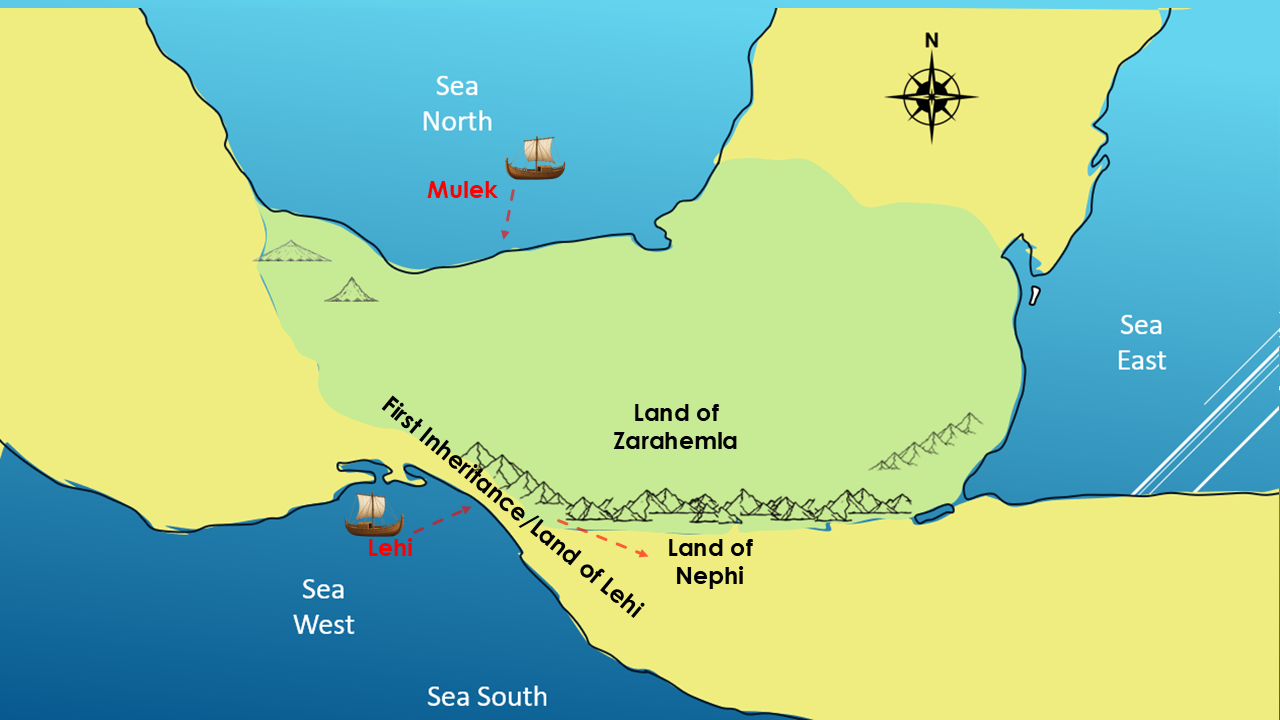
When Lehi arrived in the promised land, his family settled in what we've called the Land of First Inheritance.
This was the land where Lehi first landed.
Nephi lived there with his father, his mother, his brothers, their families, and the others who had joined them.
But eventually the conflict between Nephi and his brothers became so serious that the Lord warned Nephi to leave.
Nephi tells us:
And then Nephi gives us a fascinating list.
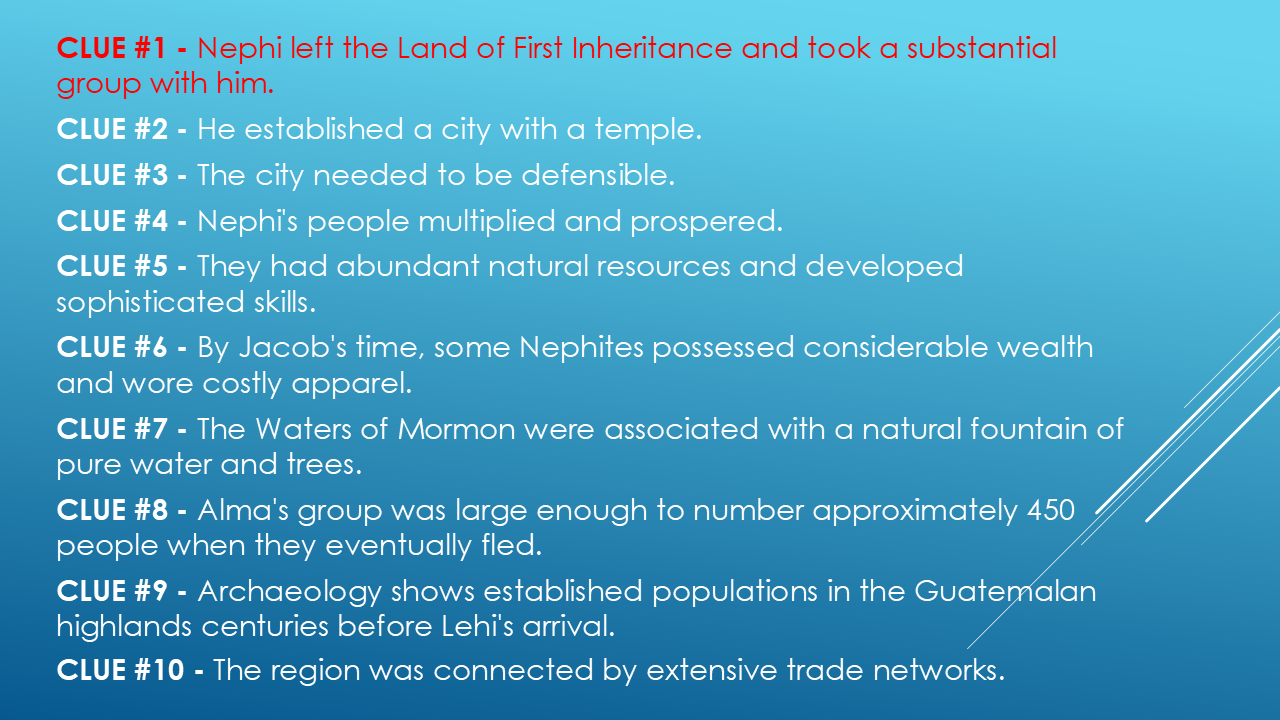
CLUE #1
Nephi did not leave alone.
He took his family, Zoram and his family, Sam and his family, his younger brothers, his sisters...
and all those who would go with him.
This was already more than just Nephi's immediate family.
They became:
And then something remarkable happened.
They began to establish a new community.
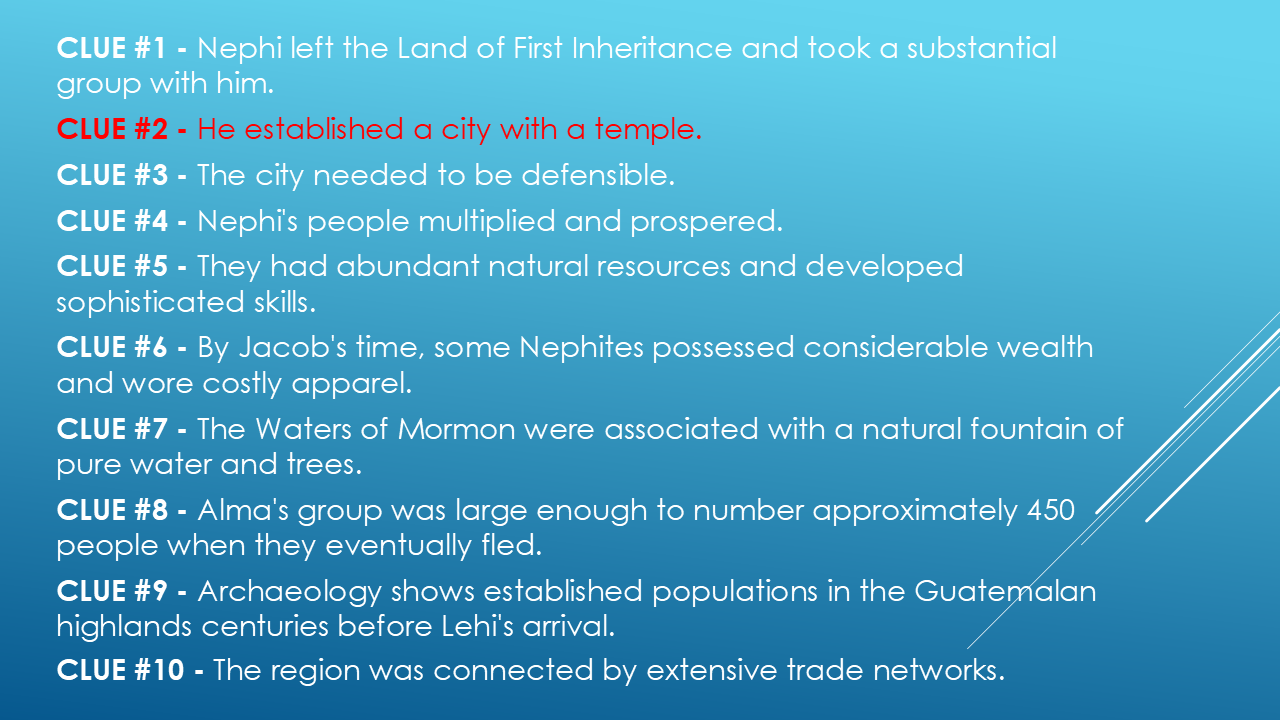
2. NEPHI BUILDS A CITY
Nephi says:
“And we lived after the manner of happiness.”
They planted crops.
They raised animals.
They worked with metals.
They built buildings.
And Nephi built a temple.
He says:
This wasn't a temporary campsite.
It had become a city and an organized society.
And Nephi gives us another important clue.
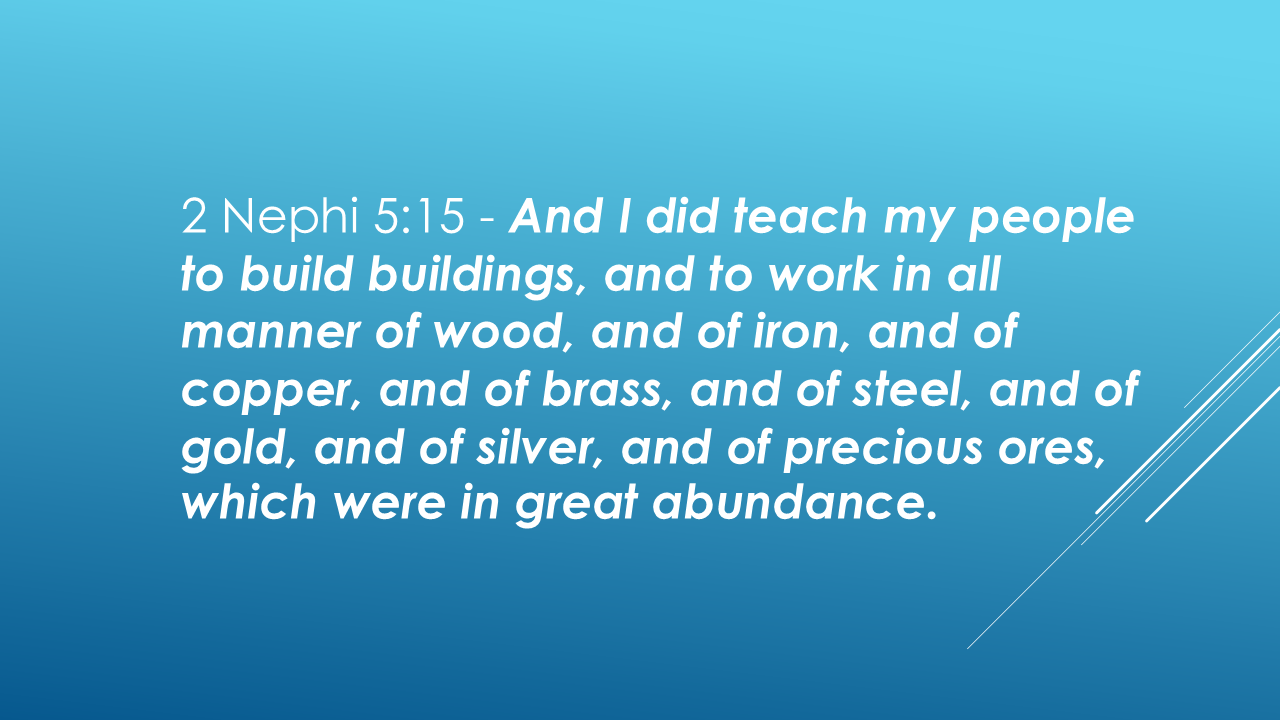
Think about what Mormon is telling us.
These people had:
construction...
agriculture...
metal works...
precious metals...
a temple...
and eventually, considerable wealth.
So where would Nephi establish such a community?
3. A DEFENSIBLE RIDGE
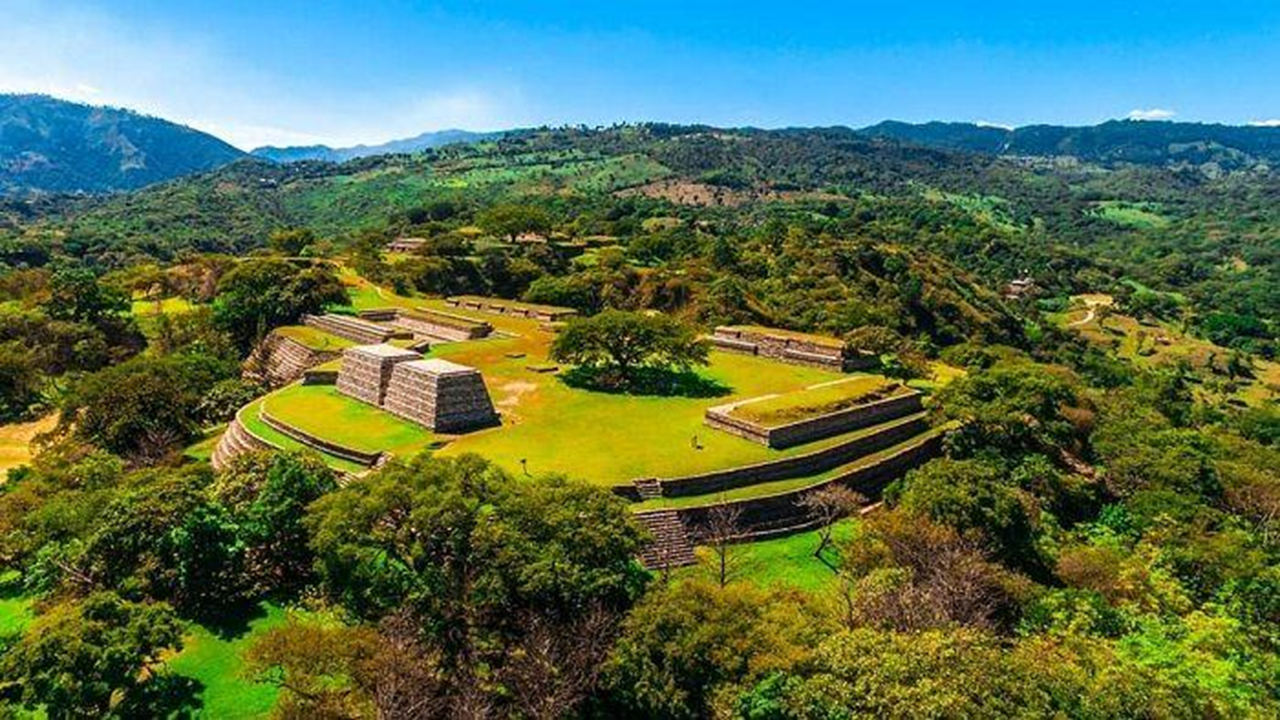
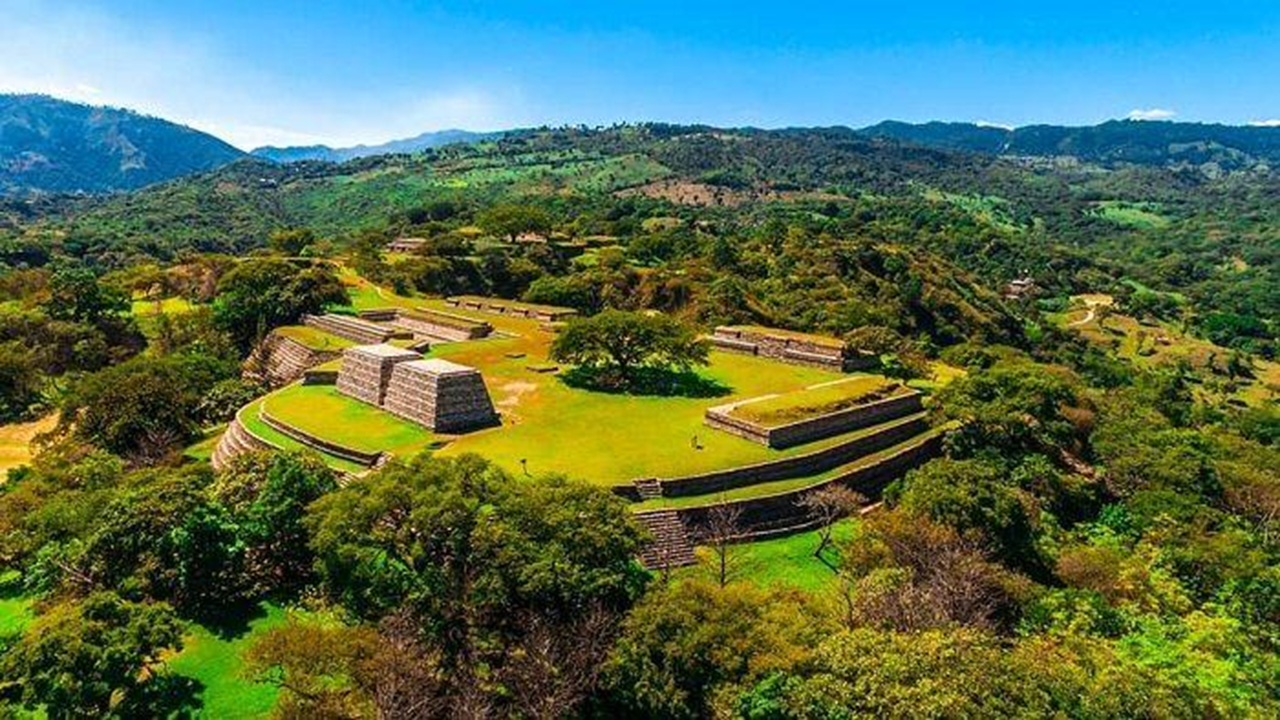
I've been here.
This is Mixco Viejo, Guatemala.
Look at the terrain.
The ancient settlement sits on a high ridge with steep ravines providing natural defenses.
That is exactly the kind of location we would expect for a people who had enemies nearby.
Now, I want to be very careful here.
The visible ruins at Mixco Viejo are not from Nephi's time.
They date much later, approximately 1200–1500 AD.
So, we are not saying:
“These ruins are the City of Nephi.”
But there is something very interesting beneath them.
Archaeological excavations have identified earlier construction phases beneath portions of the later structures.
So, the question becomes:
Could this ridge have been occupied long before the ruins we see today?
We don't have enough evidence to say that it was Nephi's city.
But geographically, this is an extremely interesting location.
4. LOOK ACROSS THE RIDGE
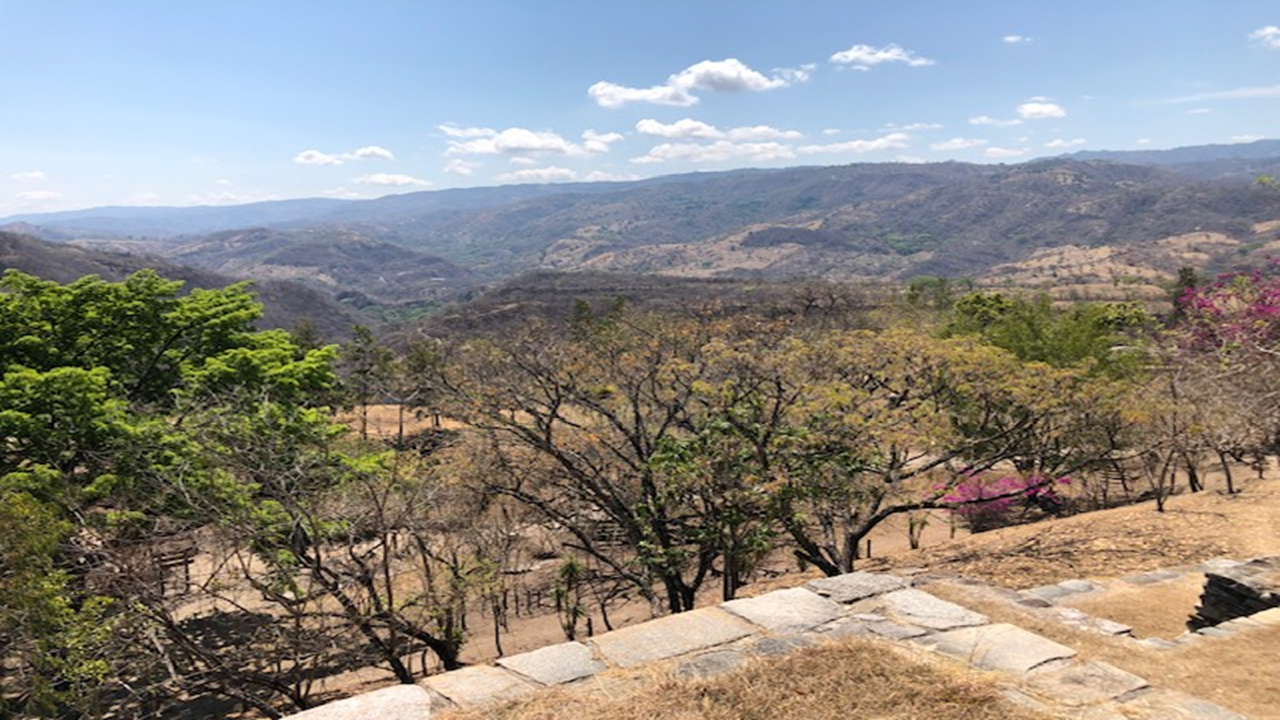
Now look across the valley.
There is another ridge.
And there are ancient ruins there as well.
Why is that interesting?
Because later, during the reign of King Noah, the Nephites were watching for the Lamanites.
Mormon tells us that Noah built a tower.
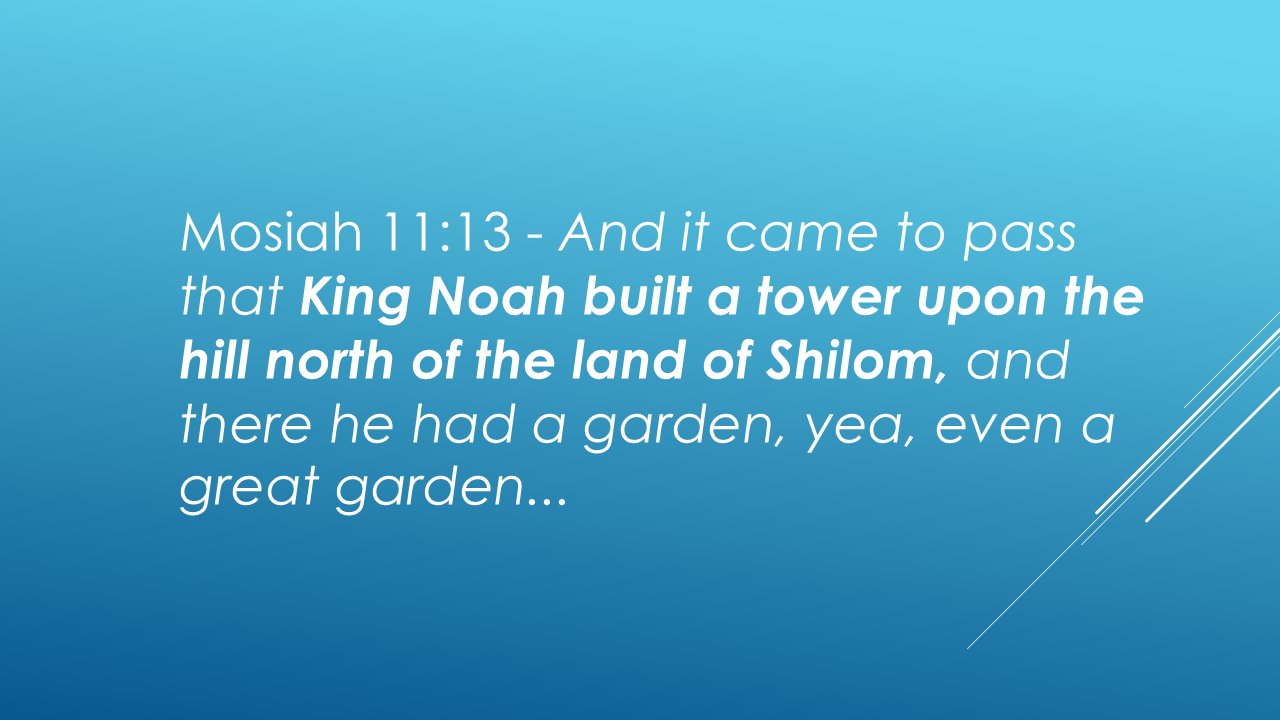
And from the tower they could observe the surrounding country.
Then, when the Lamanites came to attack, the Nephites could see them approaching.
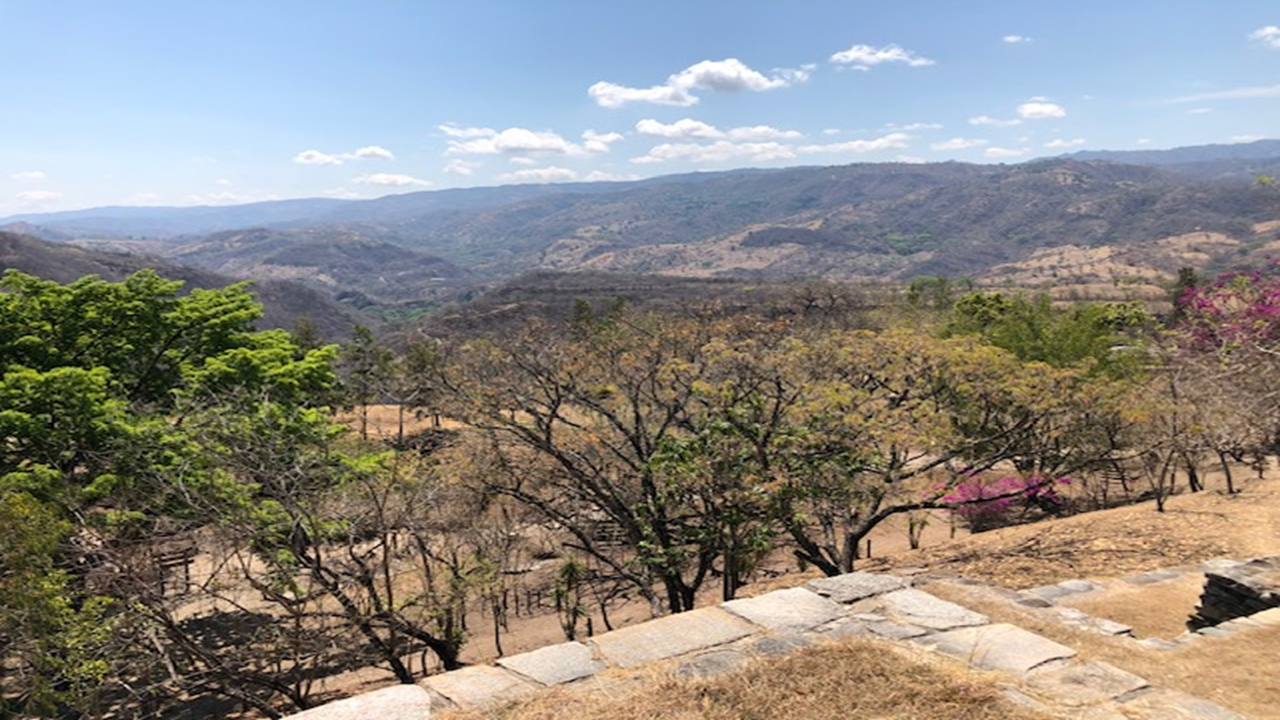
If this is the type of terrain Mormon is describing, the relationship between these two ridges becomes very interesting.
CLUE #2
The City of Nephi was located in terrain where high ground provided natural defense and observation.
Mixco Viejo fits that description remarkably well.
5. BUT WHERE WERE THE WATERS OF MORMON?
Now we come to one of my favorite clues.
During the reign of King Noah, a man named Alma began teaching those who believed the words of Abinadi.
But Alma needed a place where he and his followers could meet without being discovered.
Mormon tells us:
Then:
Eventually they came to a place called Mormon.
And Mormon gives us a very specific description.
near the water.
This was where Alma and his followers gathered.
6. LOS APOSENTOS
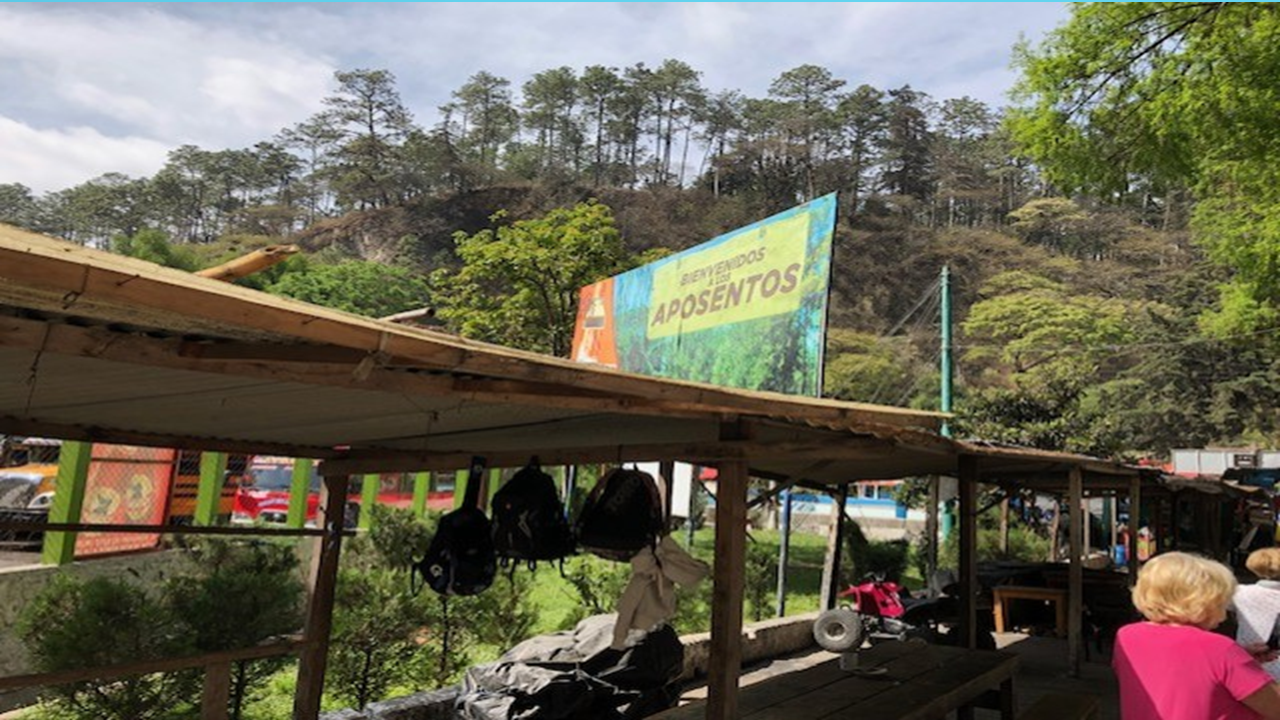
I've been here too.
This is Los Aposentos, Guatemala.
It is currently a resort swimming pool for the public. It has been enlarged over the years to accommodate all of the visitors.
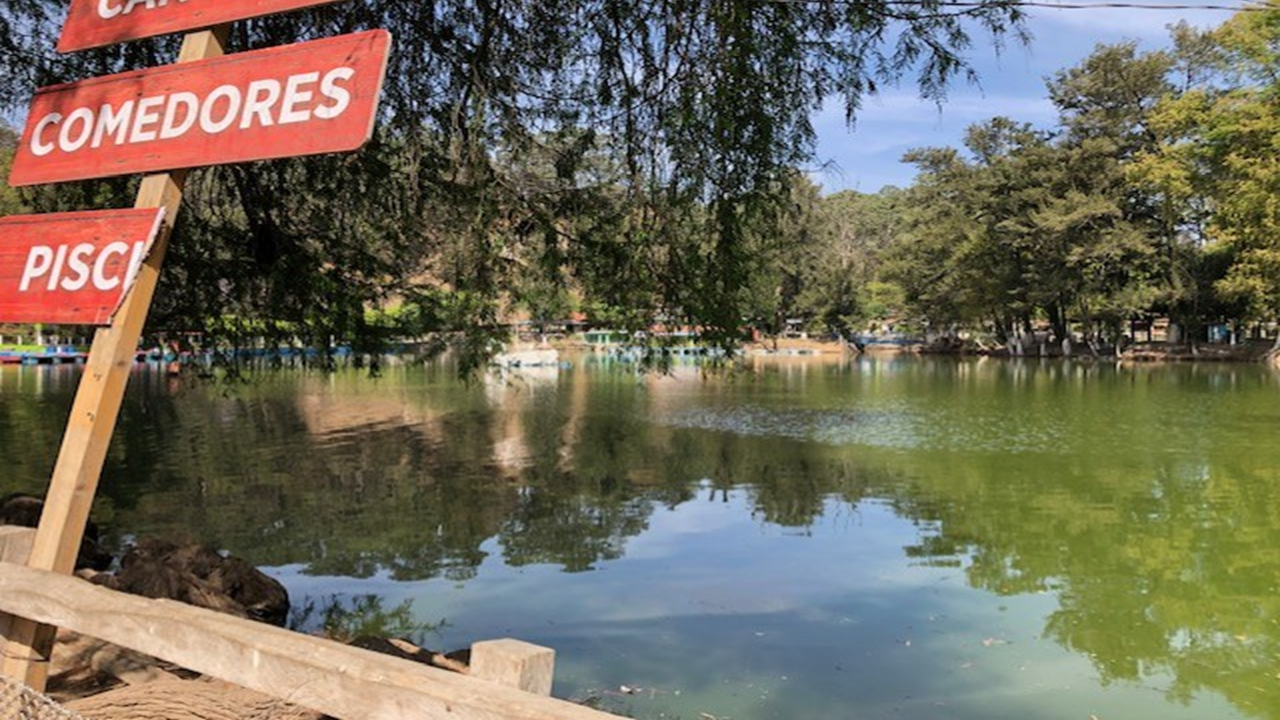
Look closely at this photograph.
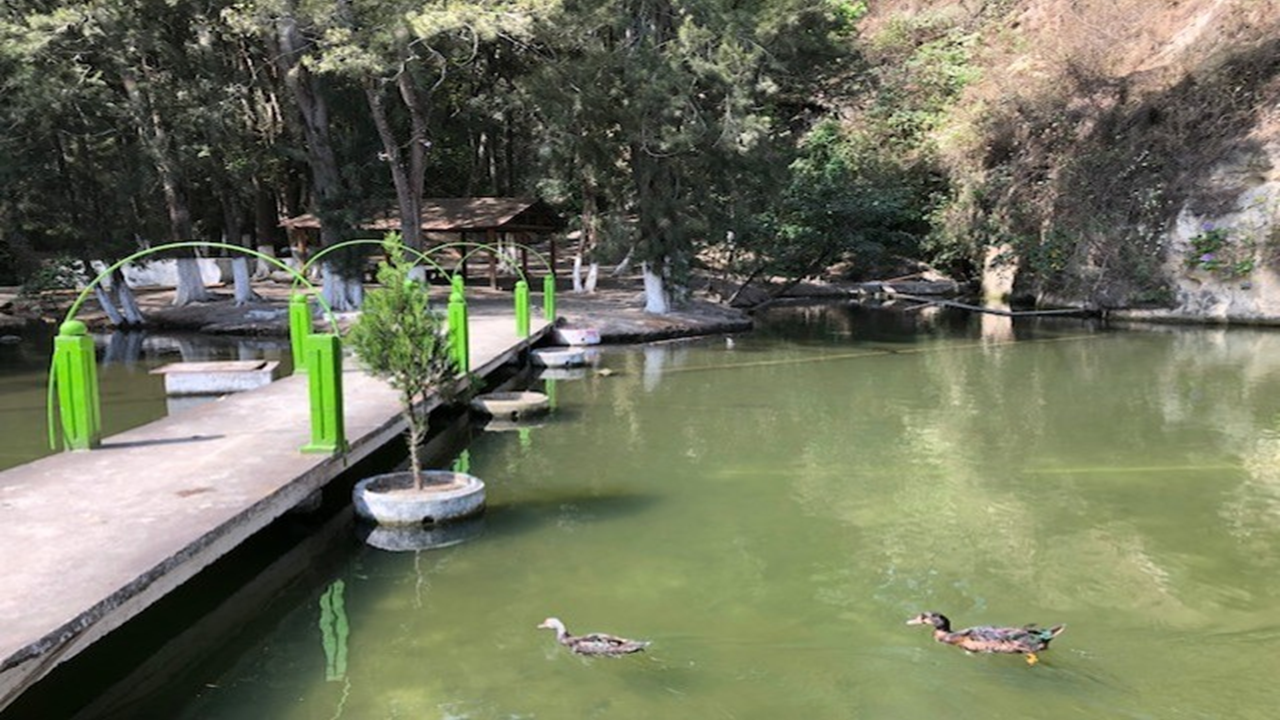
Water actually comes out of the hillside here to fill the pool.
It is a natural spring.
Now compare that with Mormon's description:
A fountain of pure water.
Trees nearby.
A secluded location.
A place where Alma could gather his followers without immediately being discovered.
And Mormon tells us this place was in the borders of the land of Nephi.
CLUE #3
The Waters of Mormon were a natural spring in a secluded, wooded location within the borders of the Land of Nephi.
Los Aposentos deserves serious consideration.
Again, we're not claiming archaeology has proven this is the Waters of Mormon.
We're asking whether the geography fits the Book of Mormon description.
And it does remarkably well.
BUT WHAT ABOUT LAKE ATITLÁN?
Before we settle on Los Aposentos, we should address another location that has been proposed as the Waters of Mormon:
Lake Atitlán.
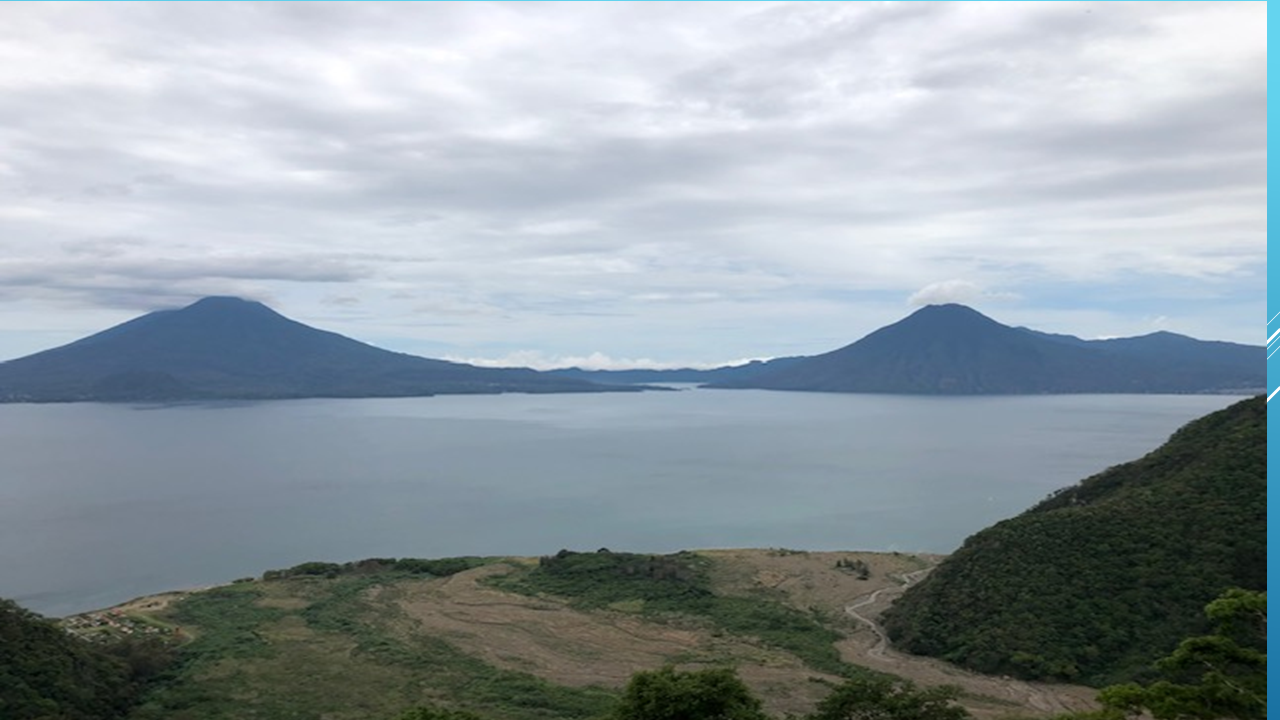
It is a beautiful lake surrounded by mountains and volcanoes. But does it fit Mormon's description?
Mormon says:
“There was in Mormon a fountain of pure water...”
and nearby was:
“a thicket of small trees, where he did hide himself.”
Lake Atitlán is enormous—more than 125 square kilometers.
That's a very different feature from a secluded fountain where Alma could hide.
There is also the issue of distance.
If the City of Nephi was in the Mixco Viejo area, Lake Atitlán is a considerable distance away.
Now compare that with Los Aposentos.
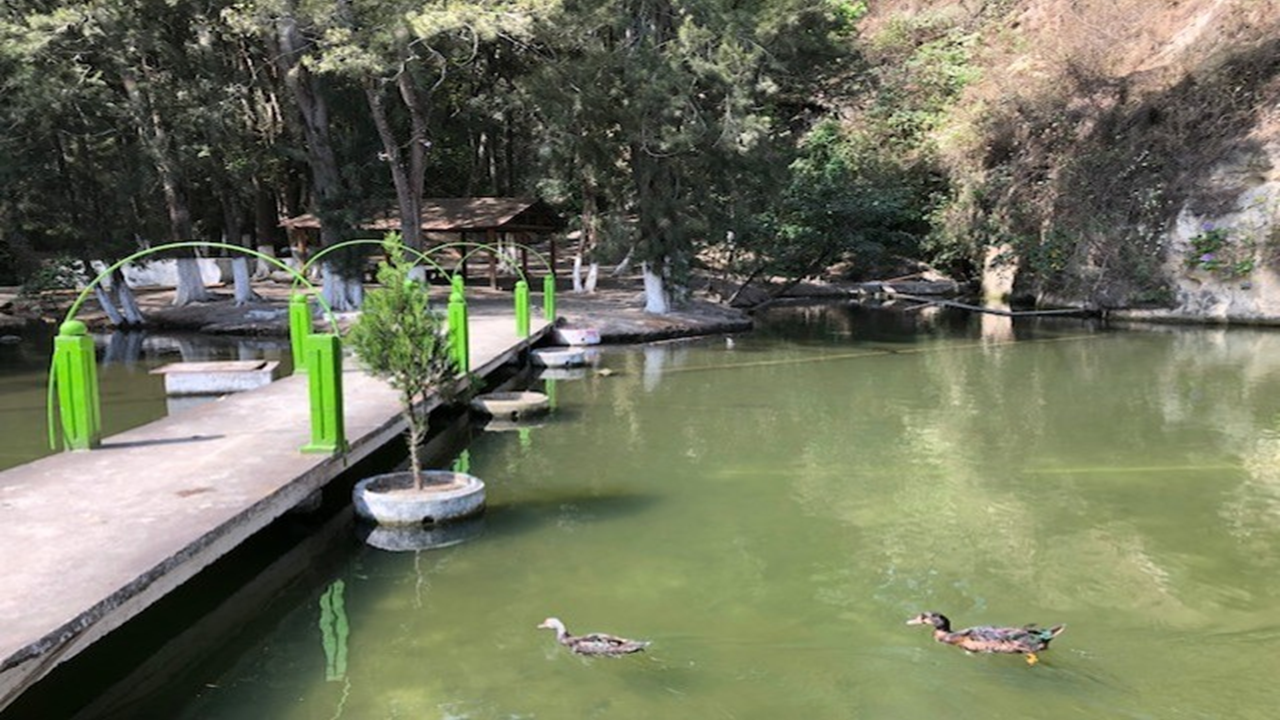
Here we have a natural spring, with water coming directly from the hillside, surrounded by trees and vegetation—and much closer to our proposed City of Nephi.
I'm not saying this proves Los Aposentos is the Waters of Mormon.
But when we let Mormon's own description guide the investigation, I believe Los Aposentos is a much better fit than Lake Atitlán.
7. BUT THERE'S SOMETHING ELSE
Remember what Nephi said?
“And all those who would go with me.”
Nephi's community wasn't simply one family.
And Laman and Lemuel weren't alone either.
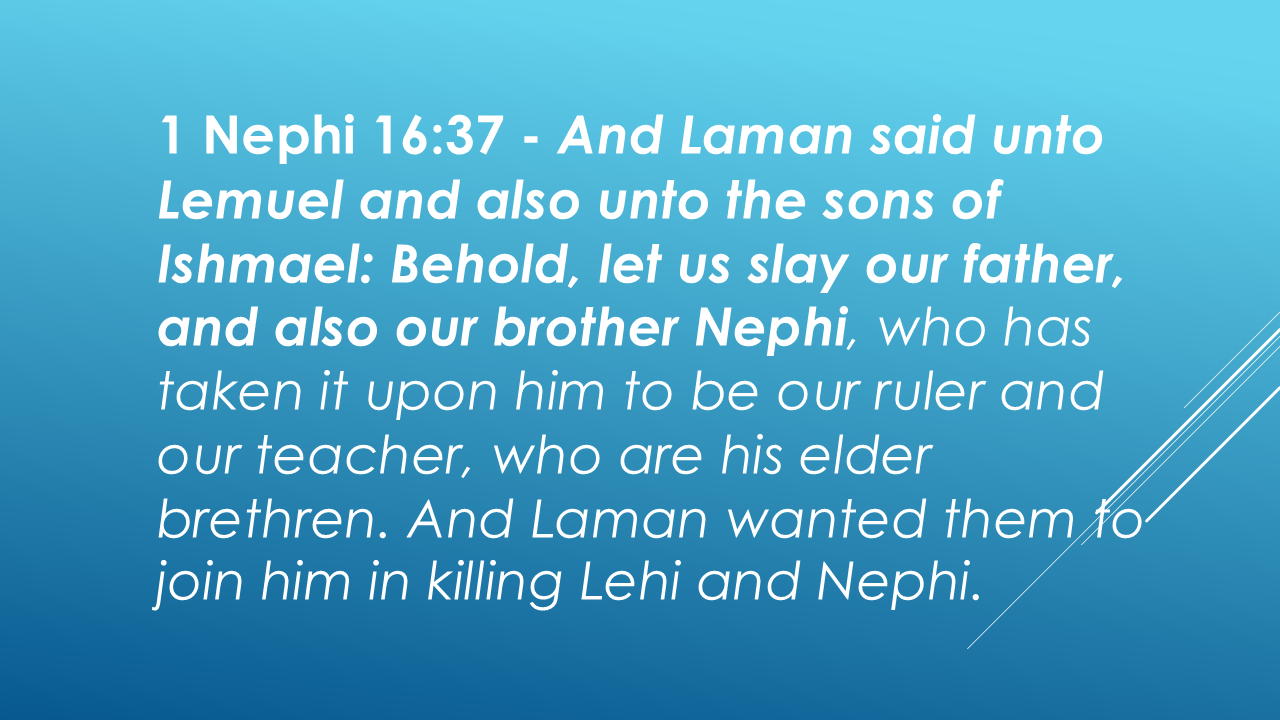
So, by this point, the Book of Mormon is describing a community considerably larger than the four sons of Lehi.
Then Nephi establishes his own community.
And the population grows.
Mormon says:
That word matters:
MULTIPLY.
The population was growing.
And they were prospering.
8. NEPHI'S PEOPLE BECOME WEALTHY
Nephi tells us they had:
gold,
silver,
copper,
iron,
steel,
precious ores,
buildings,
agriculture,
animals,
and a temple.
And later Jacob tells us something even more remarkable.
By his time, some of the Nephites had accumulated considerable wealth.
Jacob says:

And Jacob also condemns the practice of taking multiple wives and concubines.
So, we now have a picture of a society that is becoming increasingly complex.
CLUE #4
The Nephites multiplied, prospered, accumulated wealth, developed specialized skills, and participated in an increasingly complex society.
And that leads to a fascinating question.
9. WERE OTHER PEOPLE ALREADY HERE?
When Lehi arrived, was this an empty wilderness?
Or were other people already living here?
The Book of Mormon does not explicitly tell us:
“There were no other people in the land.”
In fact, some of the wording leaves us with an interesting question.
And now we can turn to archaeology.
10. KAMINALJUYU
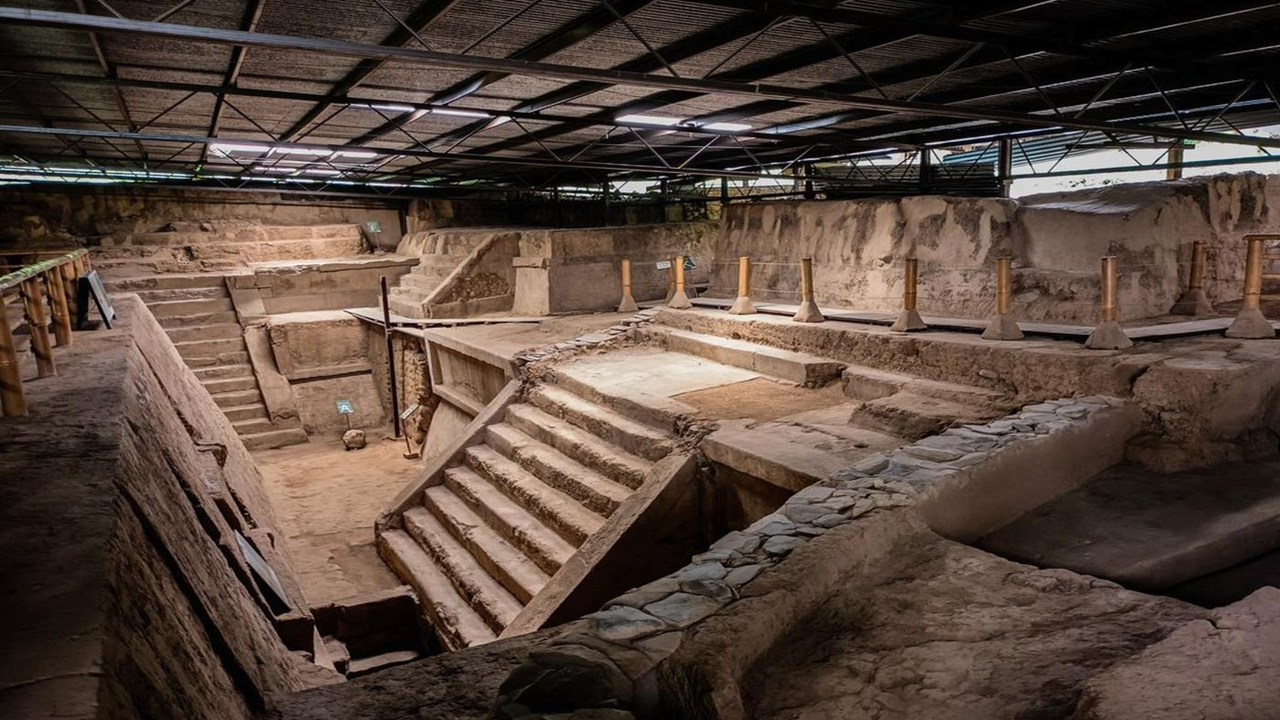
Just outside modern Guatemala City is the ancient site of Kaminaljuyu.
And this is where things get very interesting.
Archaeological evidence places occupation here beginning approximately 1100–1000 BC.
That's important.
Because Lehi's arrival is generally placed around 600 BC.
That means there were established populations in this general region several hundred years before Lehi arrived.
And Kaminaljuyu wasn't just an isolated village.
It became an important center of the Guatemalan highlands.
11. KAMINALJUYU — A TRADING CENTER
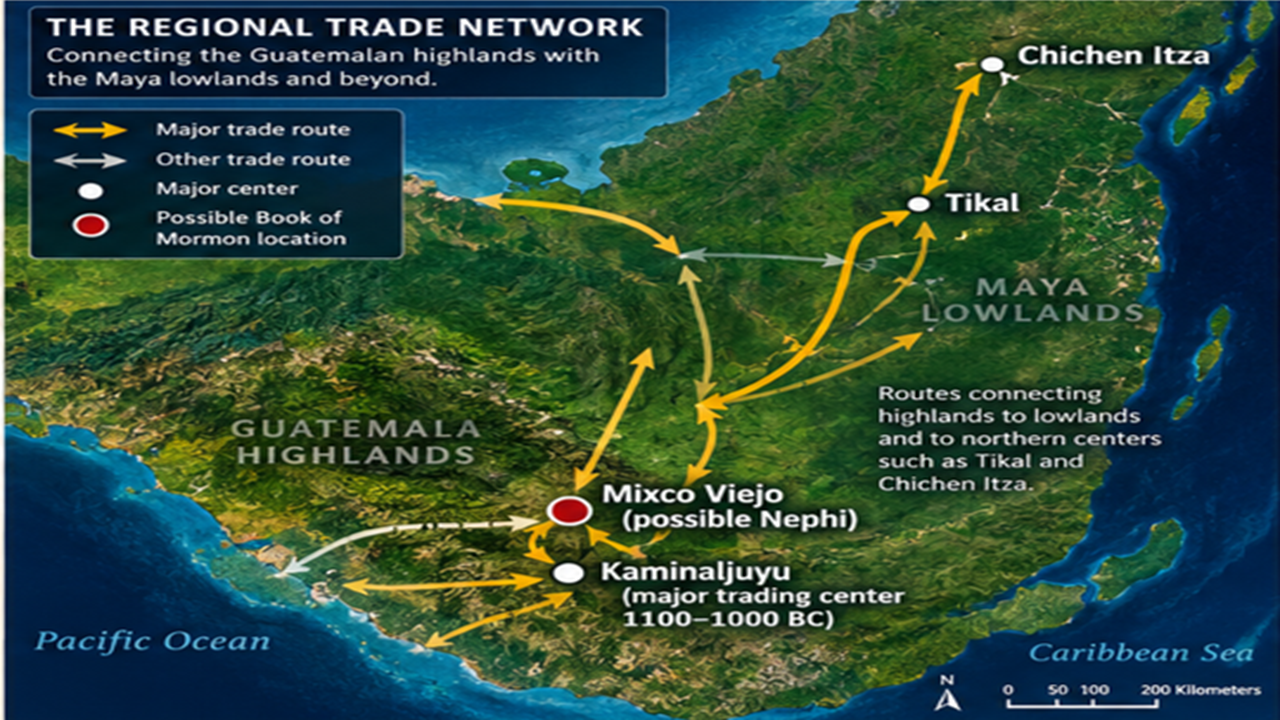
Kaminaljuyu was strategically located. It is located just on the outskirts of Guatemala City.
It sat in the highlands where important routes connected different regions of Mesoamerica.
Goods moved between the highlands and lowlands.
Obsidian.
Jade.
Ceramics.
Other valuable materials.
Kaminaljuyu became an important center in these long-distance exchange networks.
And those networks extended far beyond one city. They included Tikal and Chichen Itza.
The point isn't that one road ran in a perfectly straight line from Kaminaljuyu to Chichén Itzá.
It didn't.
These were networks of routes and exchanges connecting many communities.
CLUE #5
Lehi's descendants would have entered a region that already had established populations and long-distance trade networks.
12. WHERE DOES MIXCO VIEJO FIT?
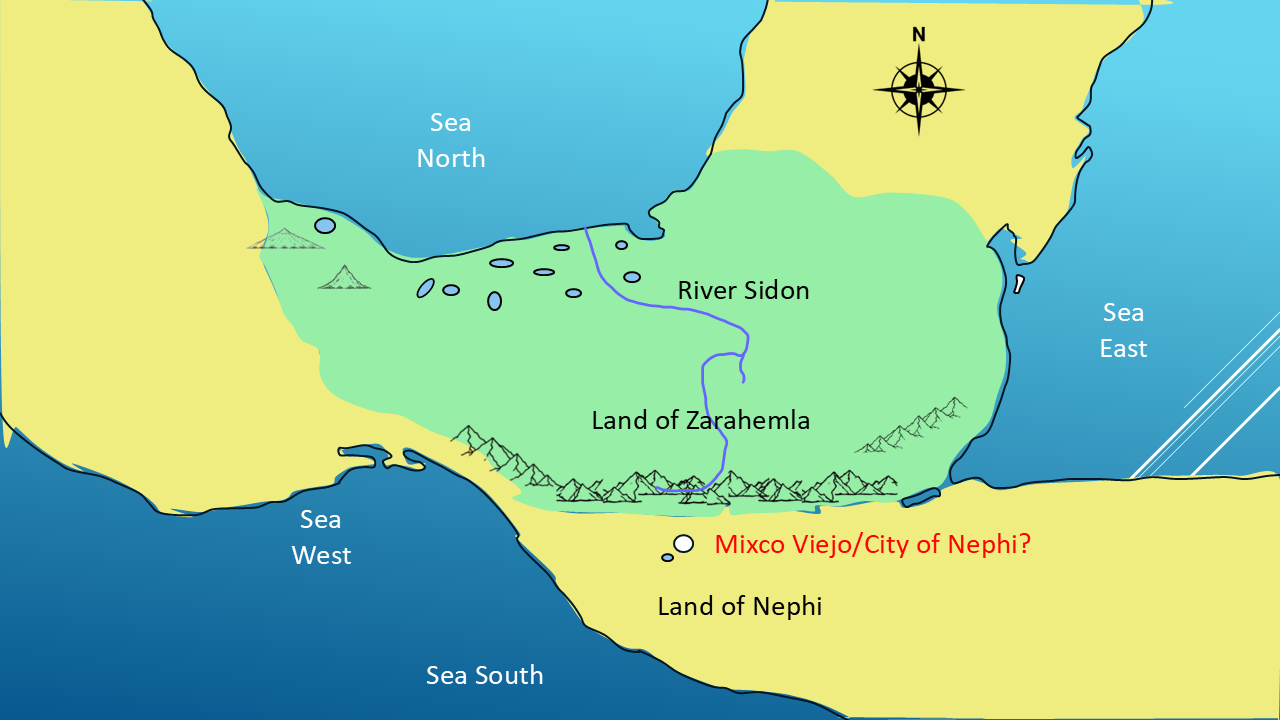
Now look at the location of Mixco Viejo.
It sits within this broader highland environment.
Its location is strategic.
Its ridge is naturally defensible.
And it lies within a region connected to the larger network of highland and lowland communities.
So, imagine the possibilities.
A new group arrives in the land.
They establish a city.
They discover abundant resources.
They develop agriculture and manufacturing.
Their population grows.
And they are living within a region where people were already trading, traveling, and building communities.
Could these populations have interacted?
The Book of Mormon doesn't tell us exactly how that interaction might have occurred.
But the archaeological evidence tells us that the region was not empty.
13. THE BIG QUESTION
This gives us a very different picture of the world Lehi entered.
Not an empty continent.
Not an untouched wilderness.
But a region where ancient populations were already established.
Where trade networks connected distant communities.
Where cities were being built.
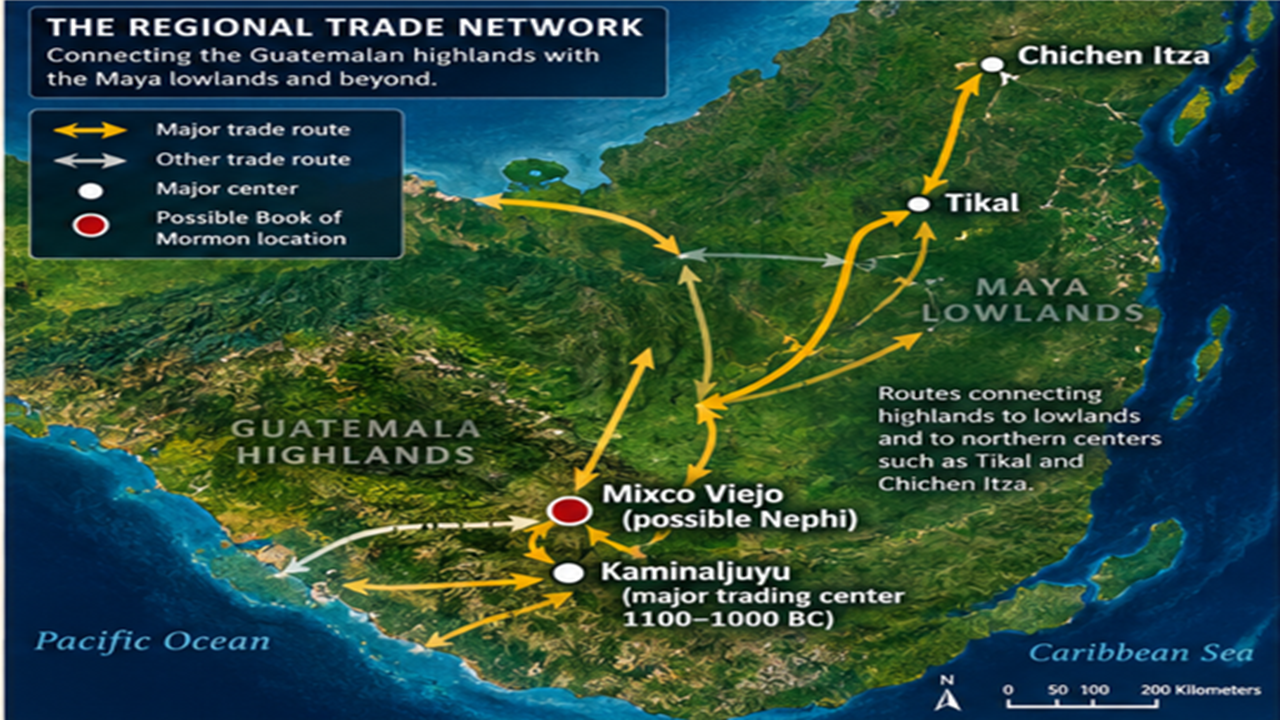
And where people were exchanging valuable goods over long distances.
And into this world came Lehi and his family.
Then Nephi left them.
He took:
his family...
Zoram and his family...
Sam and his family...
his brothers...
his sisters...
and:
“all those who would go with me.”
And somewhere in this landscape, Nephi established his city.
14. PUTTING THE CLUES TOGETHER
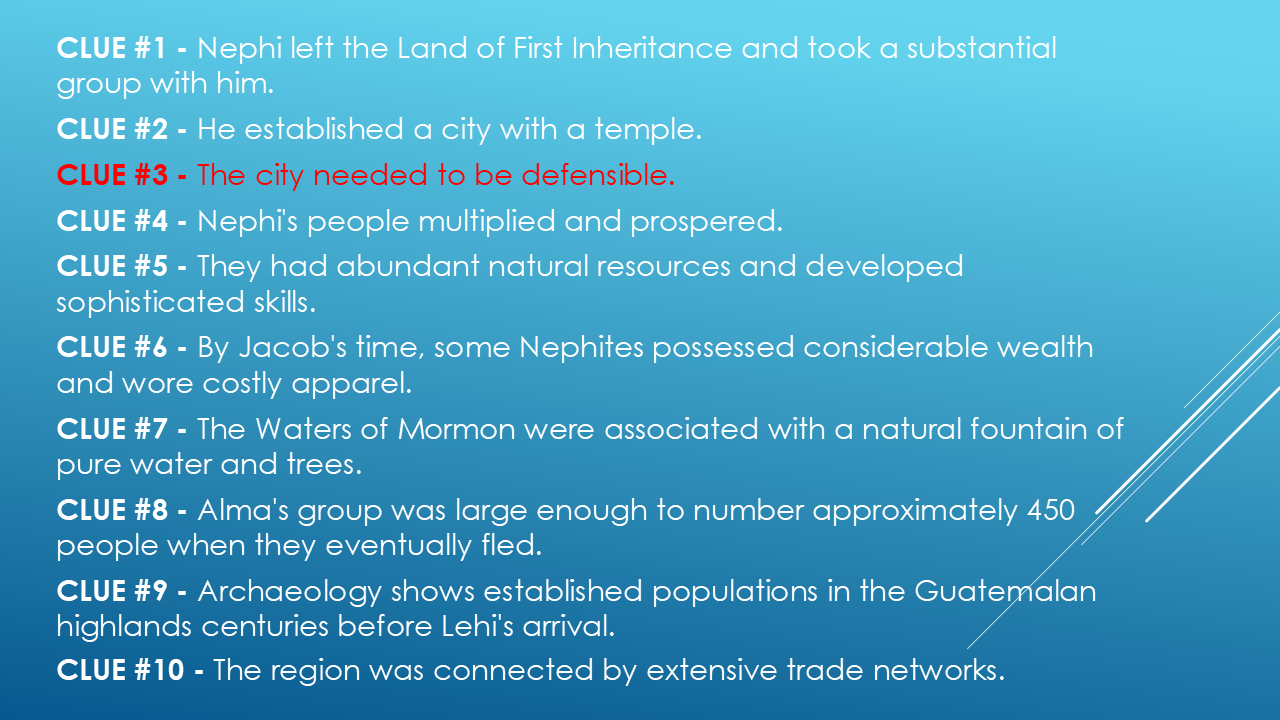
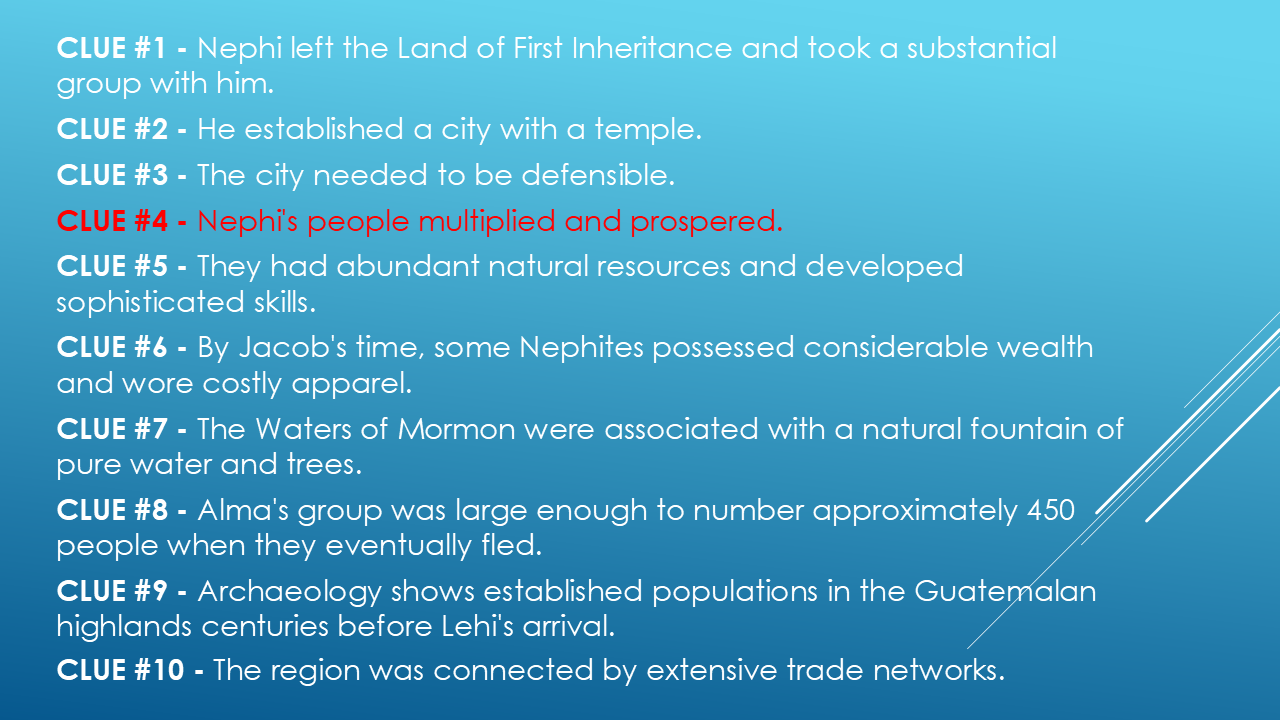
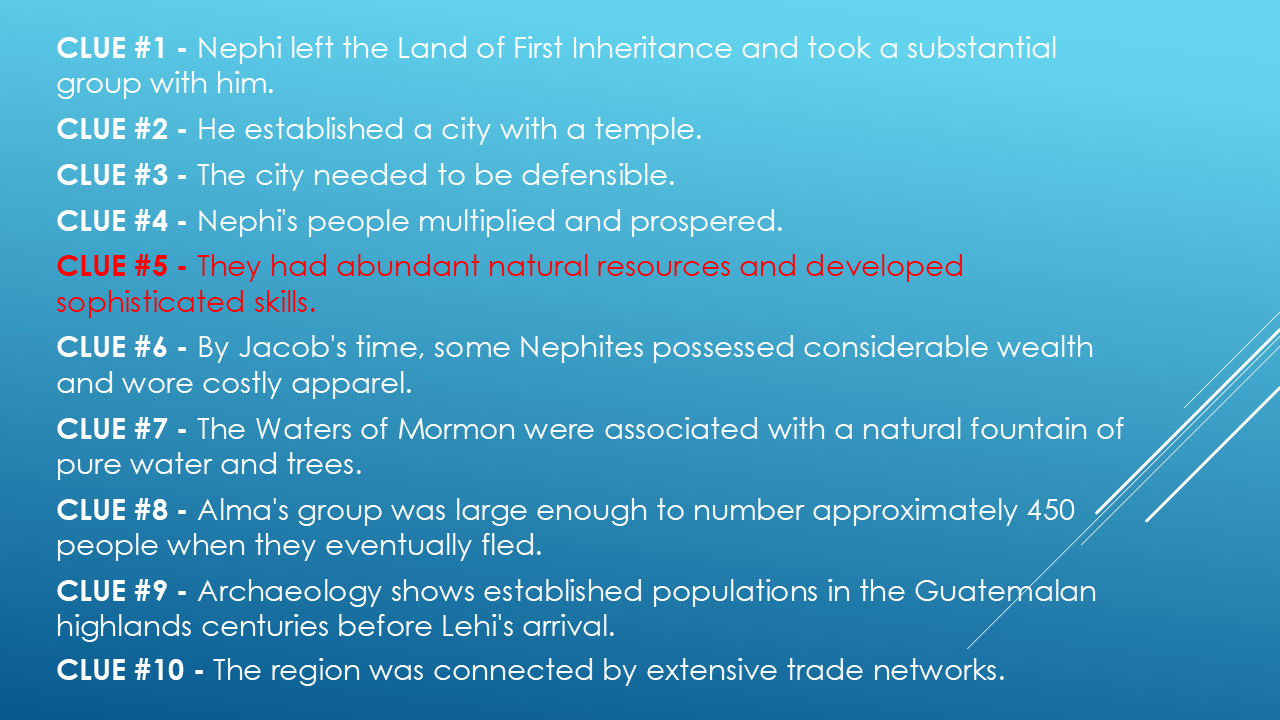
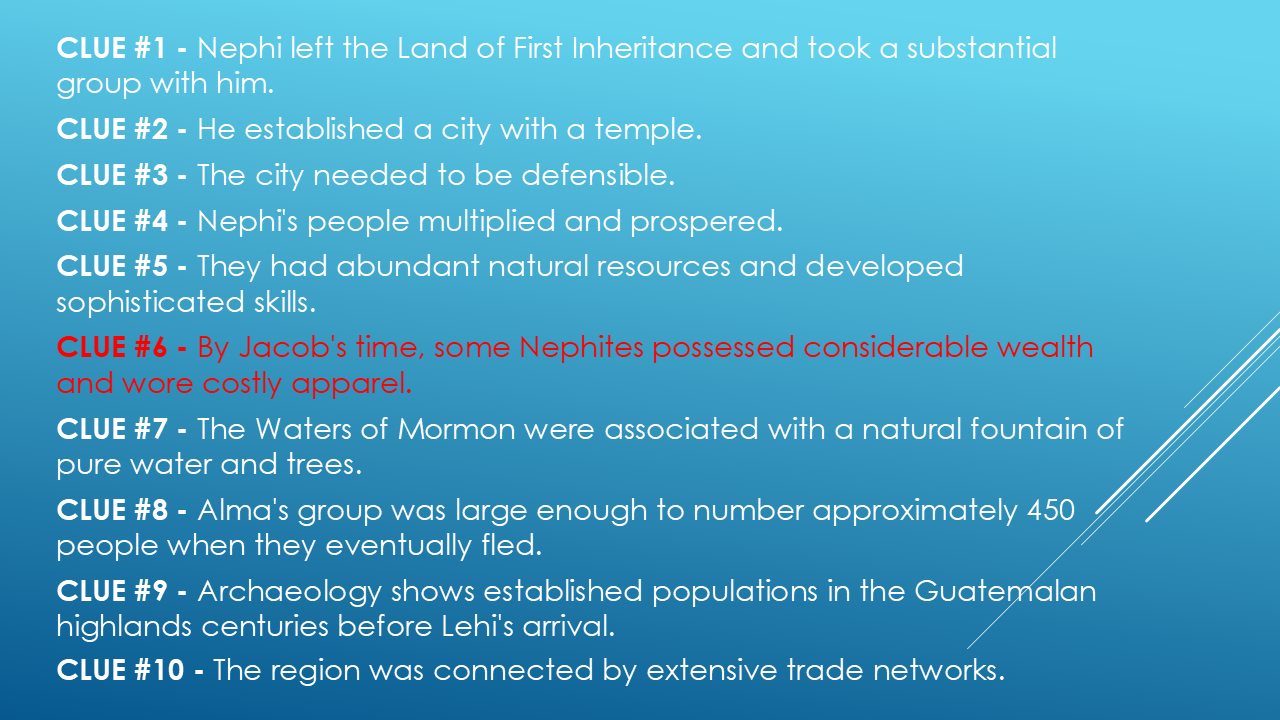
Let's put all of our clues together.
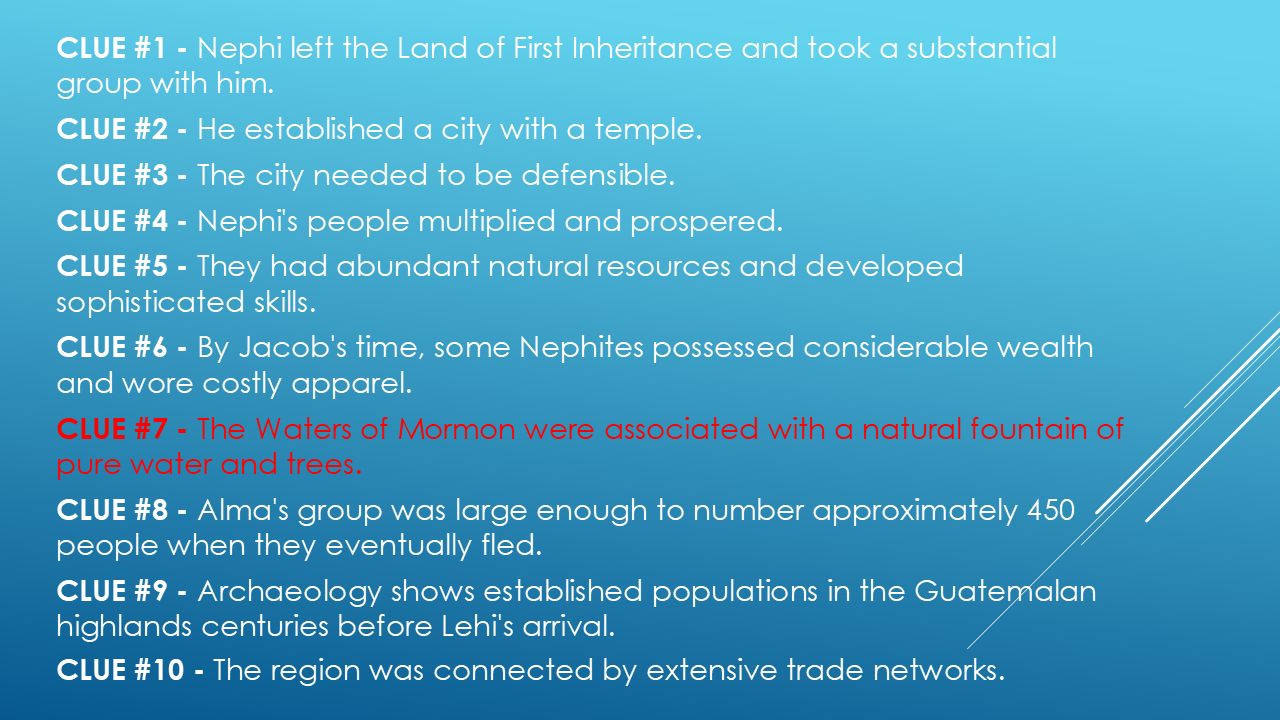
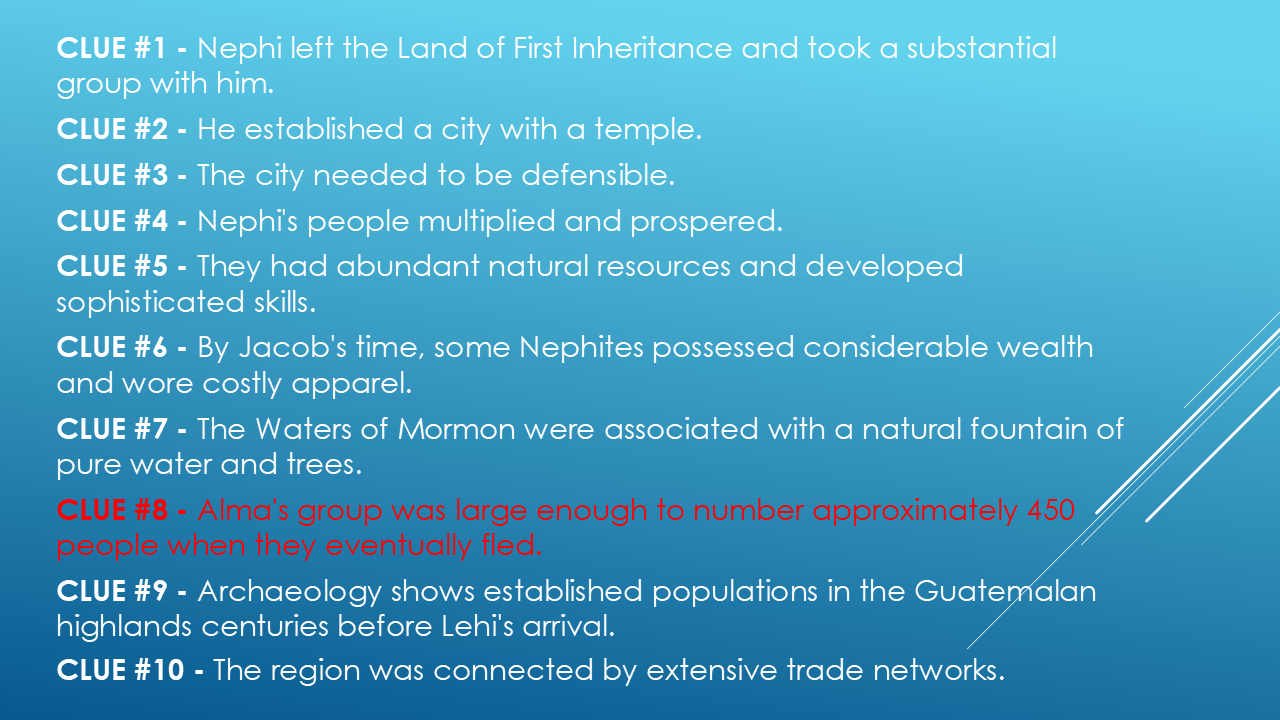
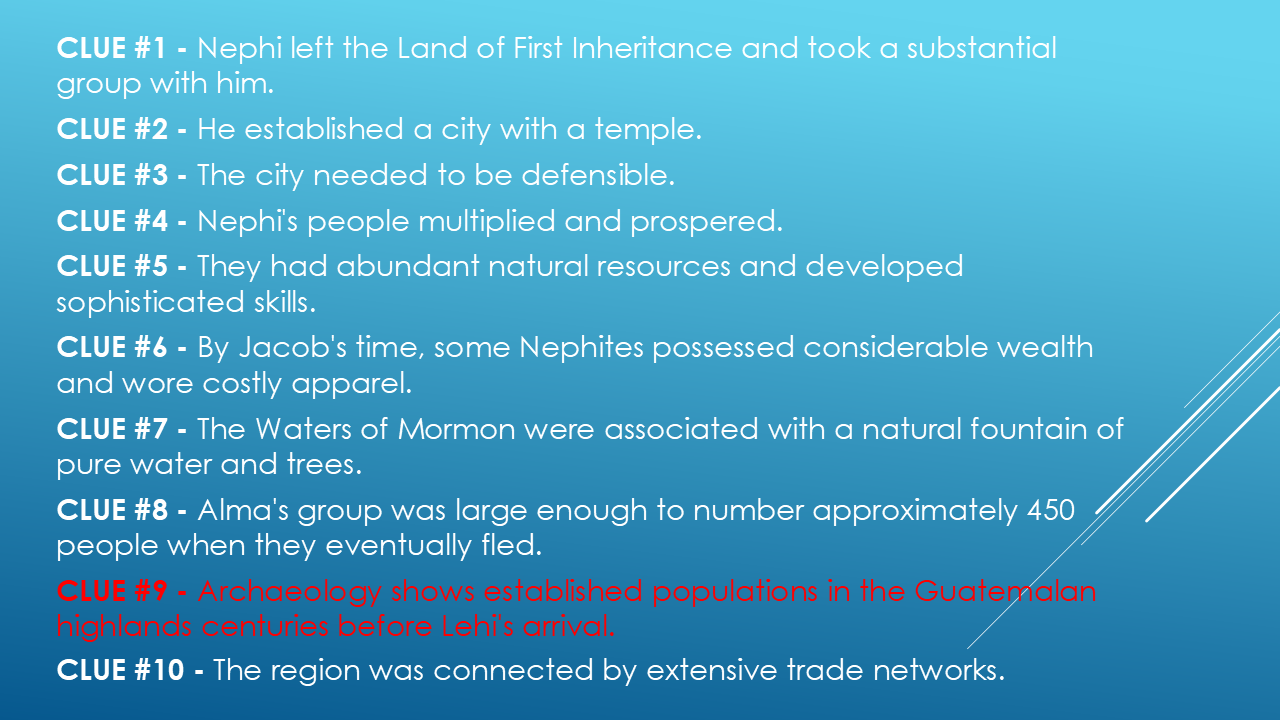
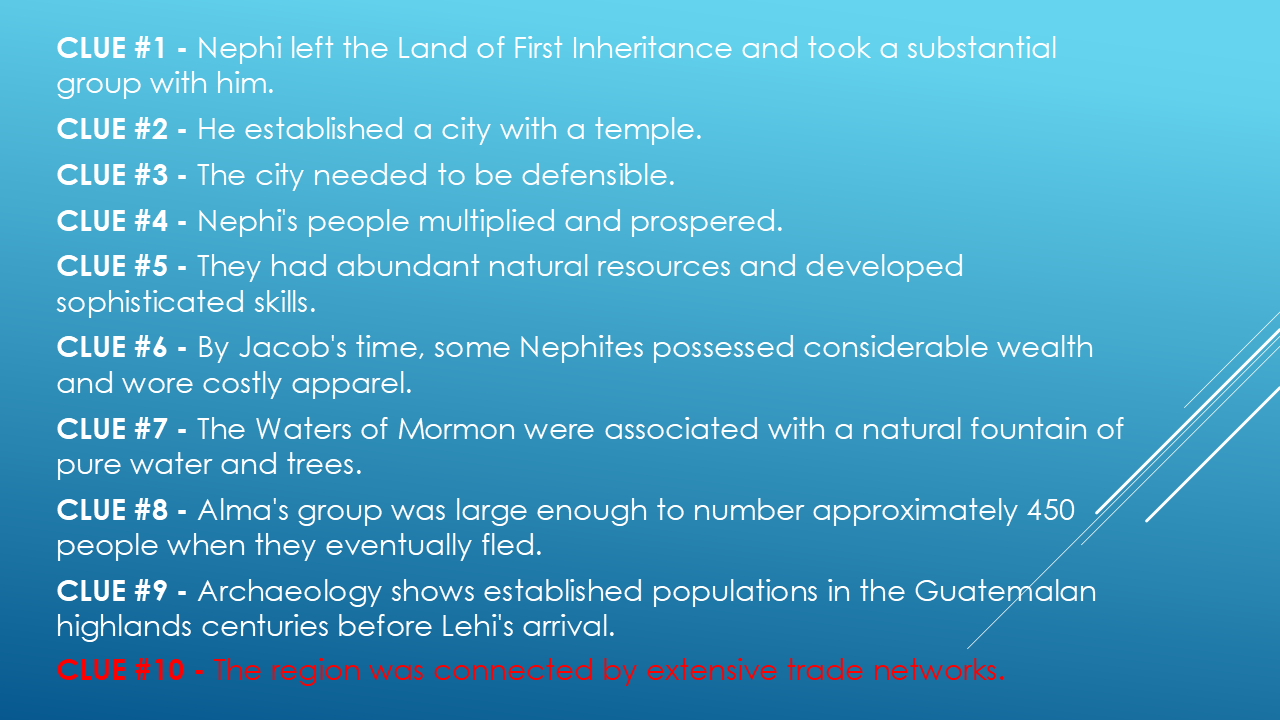
Now look at Mixco Viejo.
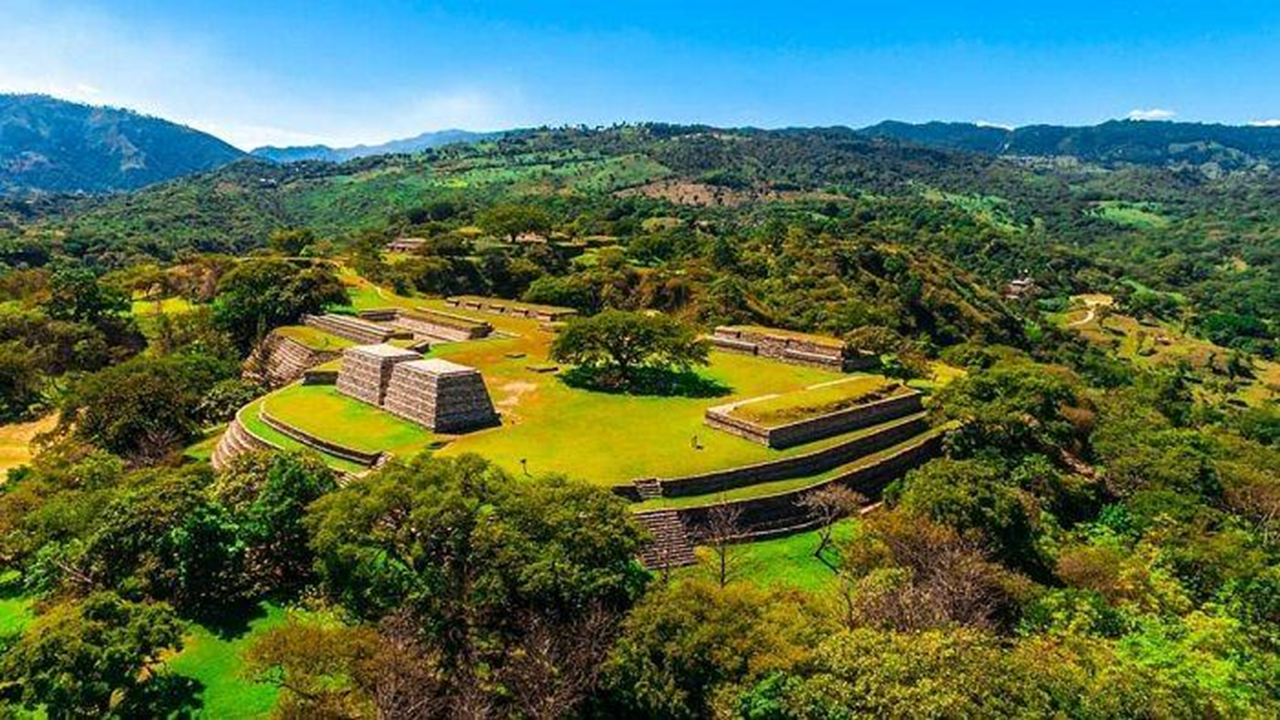
A defensible ridge.
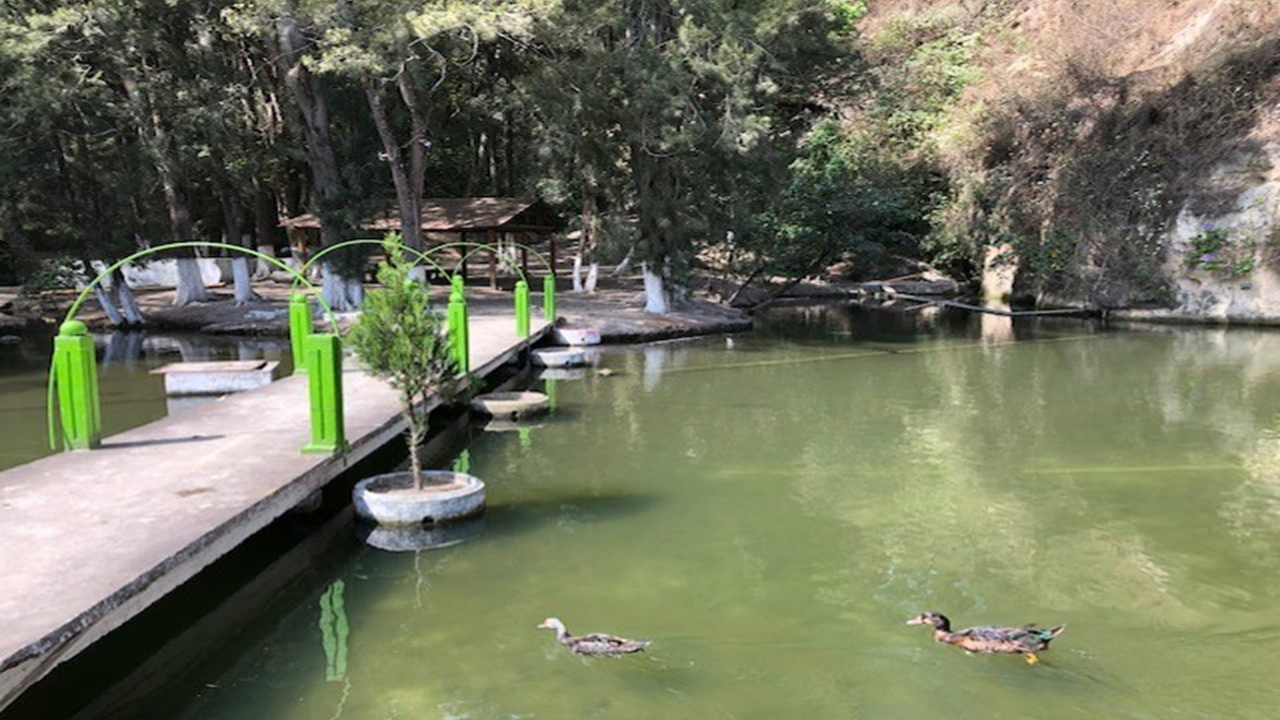
A natural spring.
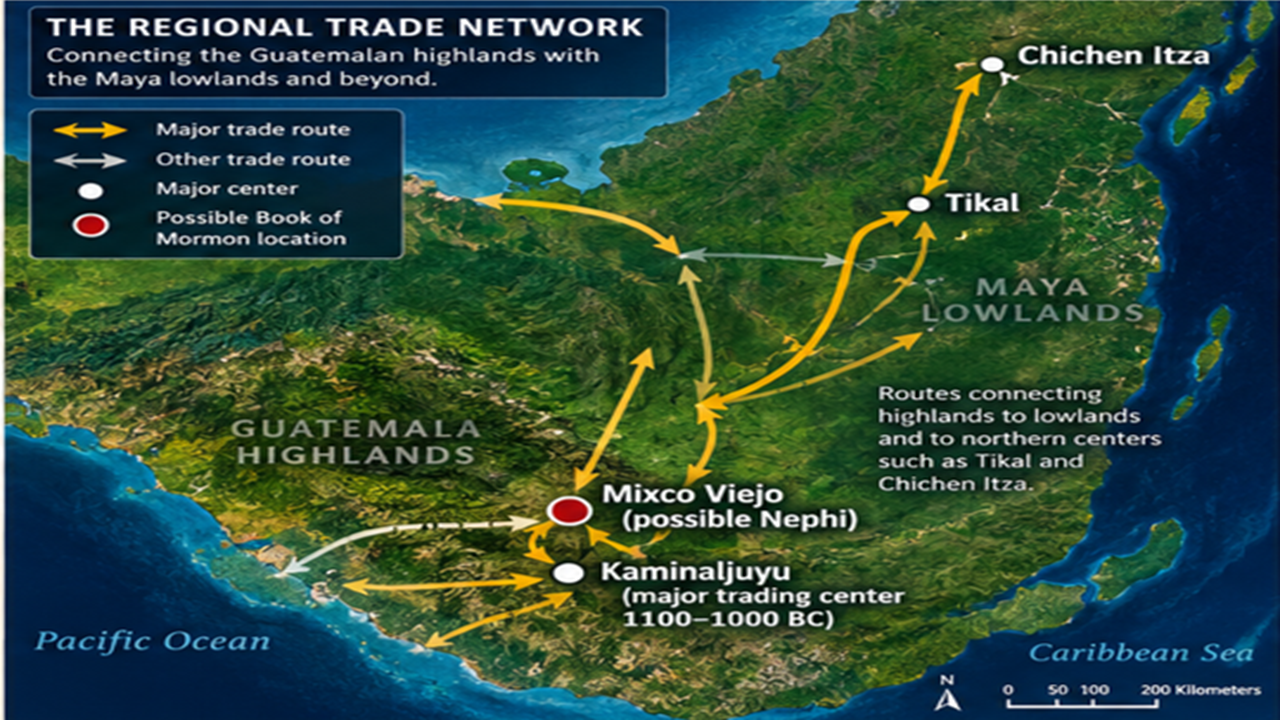
An ancient population center and major trading hub.
And surrounding them...
mountains, valleys, rivers, ancient settlements, and trade routes.
Is this coincidence?
Or are we beginning to see the geographical world Mormon was describing?
15. THE INVESTIGATION CONTINUES
We still have questions.
The Book of Mormon ends its Nephite history at a hill.
But this wasn't just any hill.
It was the place where an entire civilization came to its end.
Mormon called it Cumorah.
Ether's record called it Ramah.
And the descriptions surrounding this hill may give us some of the most important geographical clues in the entire Book of Mormon.
So where was Hill Cumorah?
And what did the land around it actually look like?
That's where we're going next.
The Big Picture of the Book of Mormon
Part 12 — Details of Hill Cumorah & Hill Ramah
The investigation continues.